
TMJ / Jaw Pain
Jaw pain, clicking, and headaches that often tie back to neck and posture.
What it is
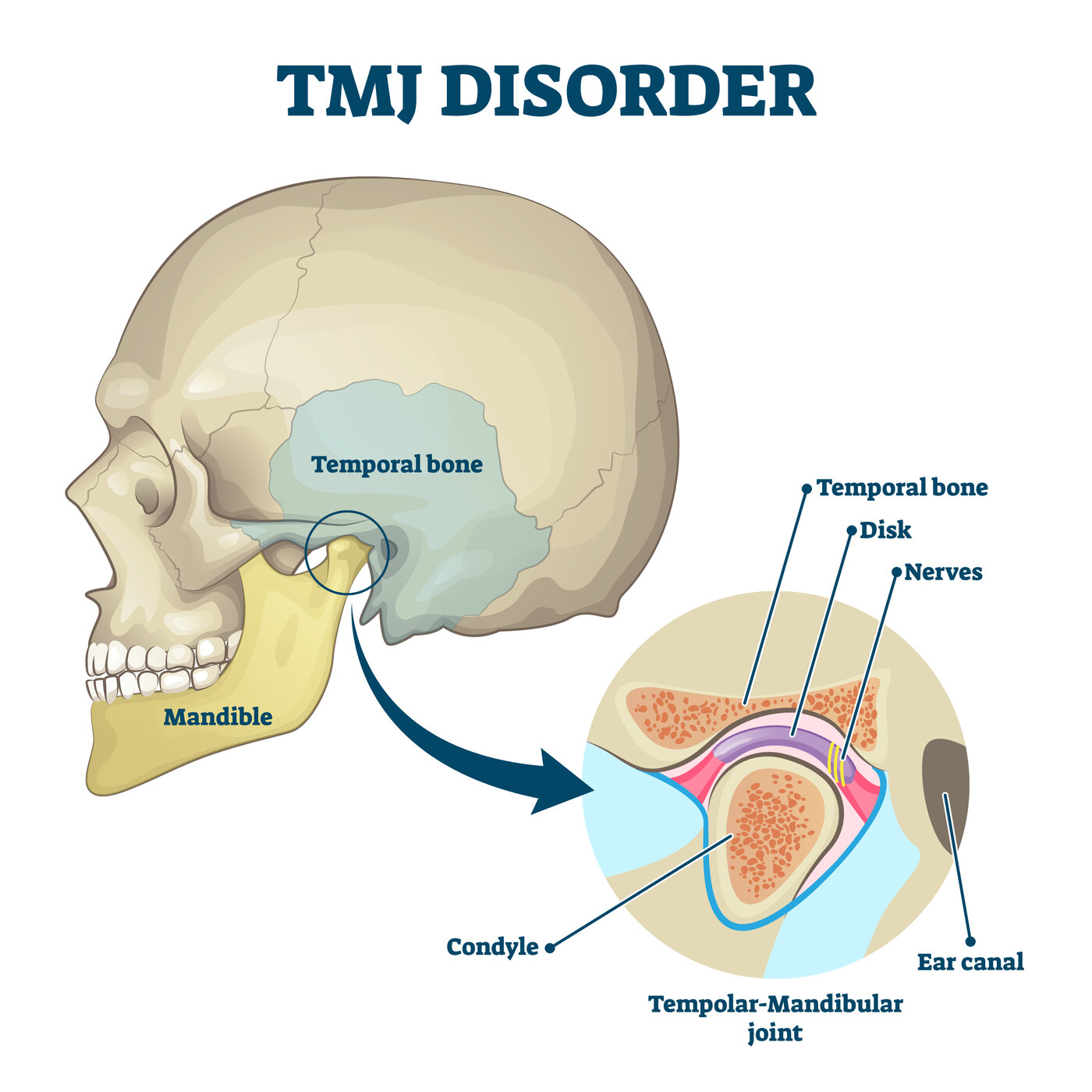
Temporomandibular joint dysfunction. Jaw mechanics, neck tension, and clenching habits are usually all in the mix.
Common symptoms
- Jaw pain with chewing
- Clicking, locking, or limited opening
- Tension headaches
Why it happens: root cause
Combined jaw, neck, and stress-related muscle tone. I work the system, not just the joint.
A closer look
Temporomandibular joint dysfunction; jaw mechanics, neck tension, and clenching habits are usually all in the mix. I treat the system (jaw, upper neck, and the clenching/stress pattern), not just the joint.
What causes it(Load > Capacity = Pain)
- Jaw and upper-cervical mechanics
- Clenching / bruxism (often stress-driven)
- Neck tension and posture
- Sometimes dental or bite factors
Why it keeps coming back
- Clenching and stress drivers unaddressed
- Neck contribution ignored
- Returning to old habits without new strategies
Why rest, stretching, and passive care aren't enough
Treating only the jaw joint while ignoring the neck and the clenching pattern gives short-lived relief.
Conditions that can mimic this
- Cervical referral / upper neck
- Dental pathology
- Trigeminal or other nerve pain
- Ear pathology / tension headache
Dental causes should be evaluated by a dentist, I coordinate. Persistent locking or a trauma history warrants further workup.
How the ADAPT Method treats your TMJ / Jaw Pain
- A
Assess
Exam of jaw motion, clicking, the muscles of mastication, and the cervical spine, because jaw, neck, and stress almost always travel together.
- D
Decrease Pain
Modify clenching habits and jaw loads, then layer Focused Shockwave (ESWT), Radial Pressure Wave (EPAT), and EMTT around the TMJ and masticatory muscles to calm joint and muscle irritation, laser therapy (photobiomodulation) can settle reactive symptoms.
- A
Activate
Restore cervical mobility, jaw control, and tongue-posture habits, and de-load the clench pattern.
- P
Progress
Progressive jaw and neck loading with controlled jaw motion drills.
- T
Transfer
Return to normal chewing, talking, and sleep, with stress and habit awareness so the clench doesn't quietly return.
ADAPT closes the gap between LOAD and CAPACITY, lowering what's stressing the tissue while building what the tissue can handle.
FAQ
Why does my dentist's night guard not fix it?+
A night guard protects teeth, and it doesn't change the muscle, joint, or postural drivers of the pain. It's useful, but it's only one piece.
Is TMJ related to my neck pain or headaches?+
Almost always, yes. The upper cervical spine and jaw share neurology and biomechanics, treating one in isolation rarely works.
Does laser help the TMJ?+
Yes, laser therapy (photobiomodulation) is well tolerated over the TMJ and helps modulate pain while I change the load and mechanics.
Do I need an MRI?+
Almost never. The diagnosis is clinical, and imaging is reserved for unusual cases.
Should I avoid chewy foods forever?+
Short-term modification helps during a flare. Long-term, the goal is a jaw that can handle normal eating without symptoms.
How long does it take to improve?+
Most cases feel meaningfully better in 4 to 8 weeks of focused care.
Do I need an MRI?+
Usually no, at least not first. Most musculoskeletal issues are diagnosed by history and exam. I use Clarius MSK diagnostic ultrasound in-office when it actually changes the plan: confirming a tendon issue, ruling between two diagnoses, or guiding treatment. I refer for MRI when red flags or surgical questions warrant it.
Do you take insurance?+
Form & Function is a cash-based (self-pay) practice; I don't bill insurance directly. That lets me spend more time with you and build your plan around what you actually need, not what an insurer will approve. Fees are discussed up front. On request I can provide a detailed receipt (superbill) you may submit to your insurance for possible out-of-network reimbursement, though reimbursement isn't guaranteed.
What happens at the first visit?+
I sit down and talk through your history, training, and what you've already tried. Then I go through a hands-on movement and strength assessment, look at the painful area (and the joints above and below), and use Clarius MSK ultrasound in-office when it sharpens the diagnosis. You leave with a working diagnosis and a written plan, not a vague 'come back next week.'
Book your evaluation.
An honest assessment is the first step in the ADAPT method, and the fastest path to a real plan.