Runner's Knee (Patellofemoral Pain)
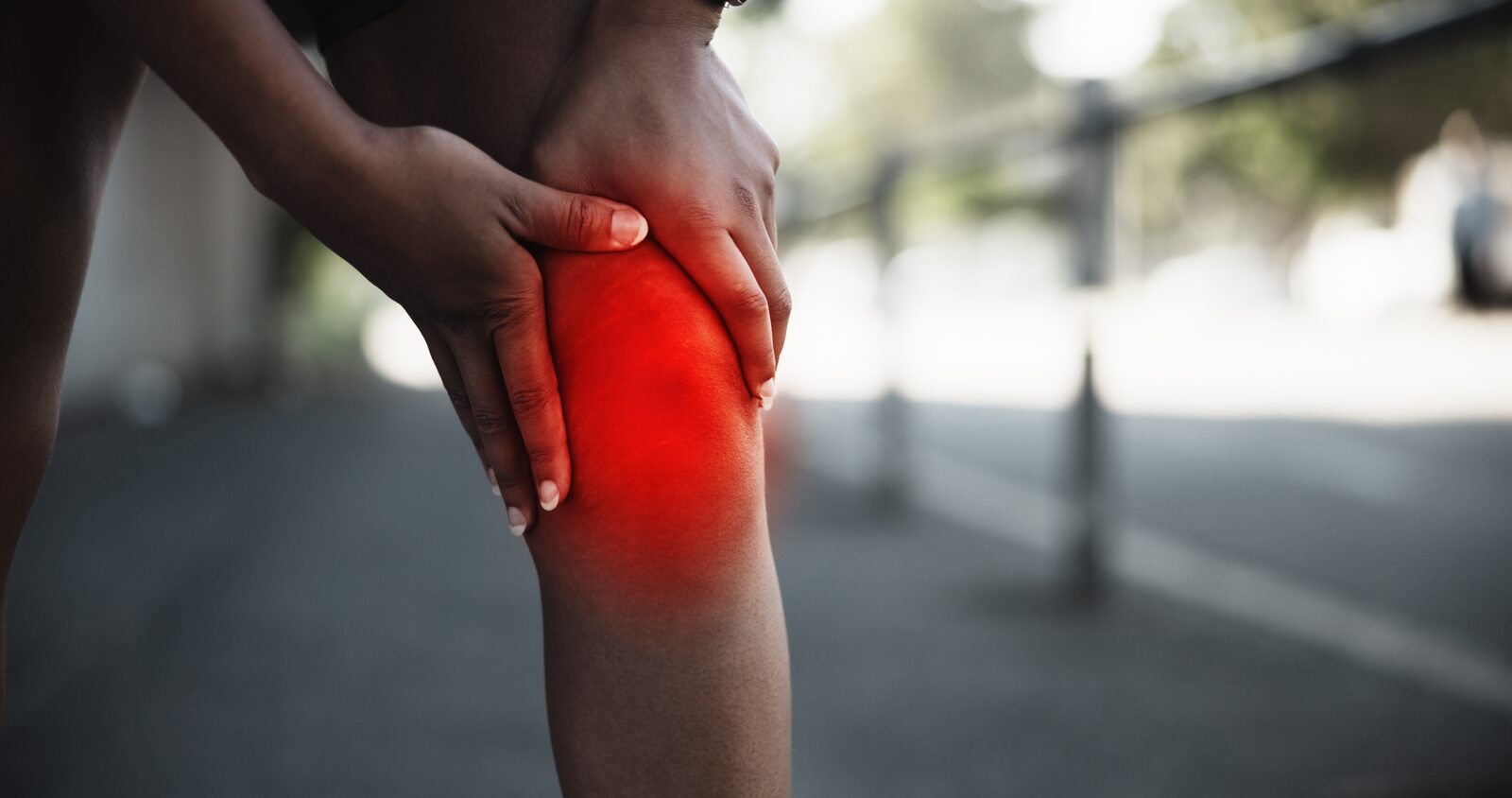
Ache around or under the kneecap, worse with hills, stairs, or sitting.
What it is
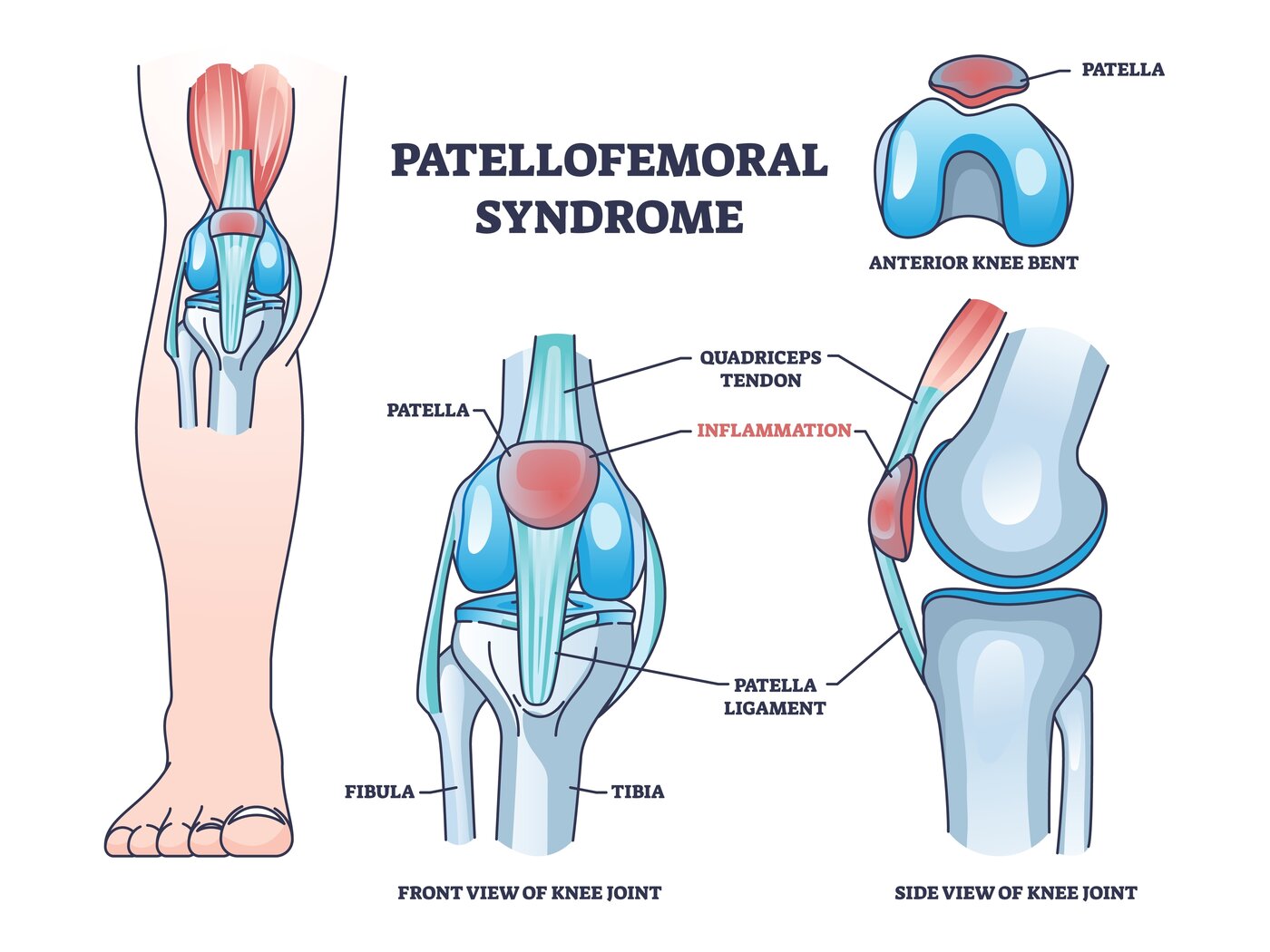
Pain around the front of the knee where the patella tracks against the femur. Usually a load-and-control problem, not a structural one.
Common symptoms
- Pain around or under the kneecap
- Worse with downhills, stairs, prolonged sitting
- Occasional crackling but typically no swelling
Why it happens: root cause
Hip and quad capacity hasn't kept up with running demands; gait and cadence often contribute. When load on a tissue chronically exceeds its capacity, pain shows up. My job is to close that gap, by lowering load, raising capacity, or both, so the tissue stops being overwhelmed.
A closer look
Patellofemoral pain, runner's knee, and is irritation of the structures around and behind the kneecap. It's usually a load-management and movement-efficiency problem, not structural damage, influenced by movement mechanics, load distribution, hip and lower-limb control, and training progression.
What causes it(Load > Capacity = Pain)
- Rapid increases in mileage
- Downhill running
- Low cadence / overstriding
- Hip and quadriceps weakness
- Movement strategies that increase patellofemoral stress
- Foot mechanics
Why it keeps coming back
- Strength and control deficits left unaddressed
- Returning to load before movement efficiency is restored
- Continuing to train without modifying contributors
Why rest, stretching, and passive care aren't enough
Symptoms ease with reduced activity but return once loading increases again. Lasting resolution requires restoring strength, control, and load tolerance, not just rest.
Conditions that can mimic this
- Patellar tendinopathy
- IT band syndrome
- Hip or foot referral
- Meniscus irritation
These involve different structures and need different strategies, so accurate diagnosis matters. Clarius MSK ultrasound can help when the source is unclear.
How I treat it
How the ADAPT Method treats your Runner's Knee (Patellofemoral Pain)
- A
Assess
Movement screen of single-leg squat, step-down, and hip control, plus a Running Analysis if it helps. Imaging is rarely needed for classic patellofemoral pain.
- D
Decrease Pain
Modify downhills, stairs, and prolonged sitting short-term, then layer Focused Shockwave (ESWT), Radial Pressure Wave (EPAT), and EMTT around the patellofemoral joint and lateral retinaculum to calm irritated tissue while I rebuild capacity.
- A
Activate
Restore hip rotation, ankle dorsiflexion, and glute med/max activation so the knee isn't doing all the steering.
- P
Progress
Progressive quad and hip strengthening (split squats, step-downs, hip airplanes), graded back into running with cadence adjustments.
- T
Transfer
Return-to-run plan with cadence cues, downhill technique, and a strength minimum that keeps the knee out of trouble.
ADAPT closes the gap between LOAD and CAPACITY, lowering what's stressing the tissue while building what the tissue can handle.
FAQ
Is runner's knee a serious injury?+
No, it's a load-and-control problem, not a structural one. The kneecap and the joint surface under it are fine; the system around them needs more capacity.
Do I need an MRI?+
Almost never for classic patellofemoral pain. The diagnosis is clinical, and imaging tends to find normal-for-age changes that don't drive treatment.
Should I stop running?+
Usually no. I modify volume, surfaces, and downhill exposure, and use the runs as part of the rehab.
Will a knee brace fix it?+
A brace or sleeve can take the edge off short-term, but it doesn't build the capacity you're missing. Treat it as scaffolding, not the fix.
Will changing my cadence help?+
Often yes. A small cadence increase reduces patellofemoral load per step. I test it during Running Analysis rather than guess.
Is it the same as a meniscus tear?+
No. Meniscus issues usually involve a clear mechanism, swelling, locking, or twisting pain. Patellofemoral pain is diffuse, position-related, and load-driven.
How long until I'm back to normal mileage?+
Most runners are back to full training in 6 to 10 weeks when strength work is taken seriously.
Will it come back?+
Only if hip and quad strength fade. The maintenance dose is small; usually two short sessions a week.
Do you take insurance?+
Form & Function is a cash-based (self-pay) practice; I don't bill insurance directly. That lets me spend more time with you and build your plan around what you actually need, not what an insurer will approve. Fees are discussed up front. On request I can provide a detailed receipt (superbill) you may submit to your insurance for possible out-of-network reimbursement, though reimbursement isn't guaranteed.
What happens at the first visit?+
I sit down and talk through your history, training, and what you've already tried. Then I go through a hands-on movement and strength assessment, look at the painful area (and the joints above and below), and use Clarius MSK ultrasound in-office when it sharpens the diagnosis. You leave with a working diagnosis and a written plan, not a vague 'come back next week.'
Book your evaluation.
An honest assessment is the first step in the ADAPT method, and the fastest path to a real plan.