
VO₂max Metabolic Testing (PNOE)
Breath-by-breath gas exchange analysis: lab-grade VO₂max, training zones, and fueling targets.
What it is
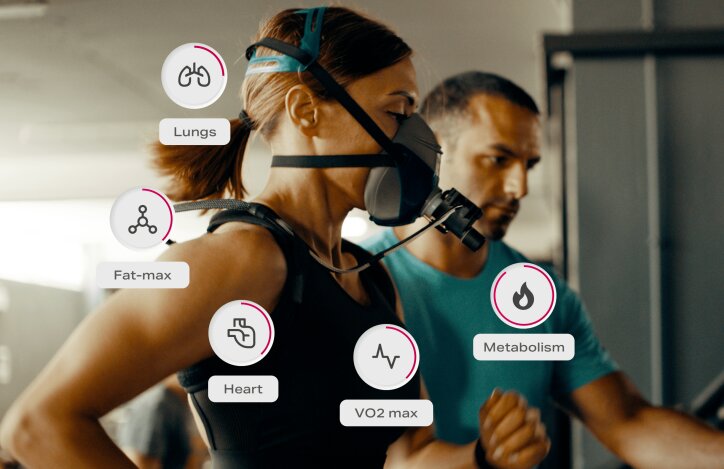
PNOE breath-by-breath gas analysis, the same technology used in sports-science labs and Olympic training centers, brought into the clinic. I measure exactly how your heart, lungs, and metabolism perform at rest and under load, then translate the data into training zones, fueling targets, and a baseline you can track.
How it works
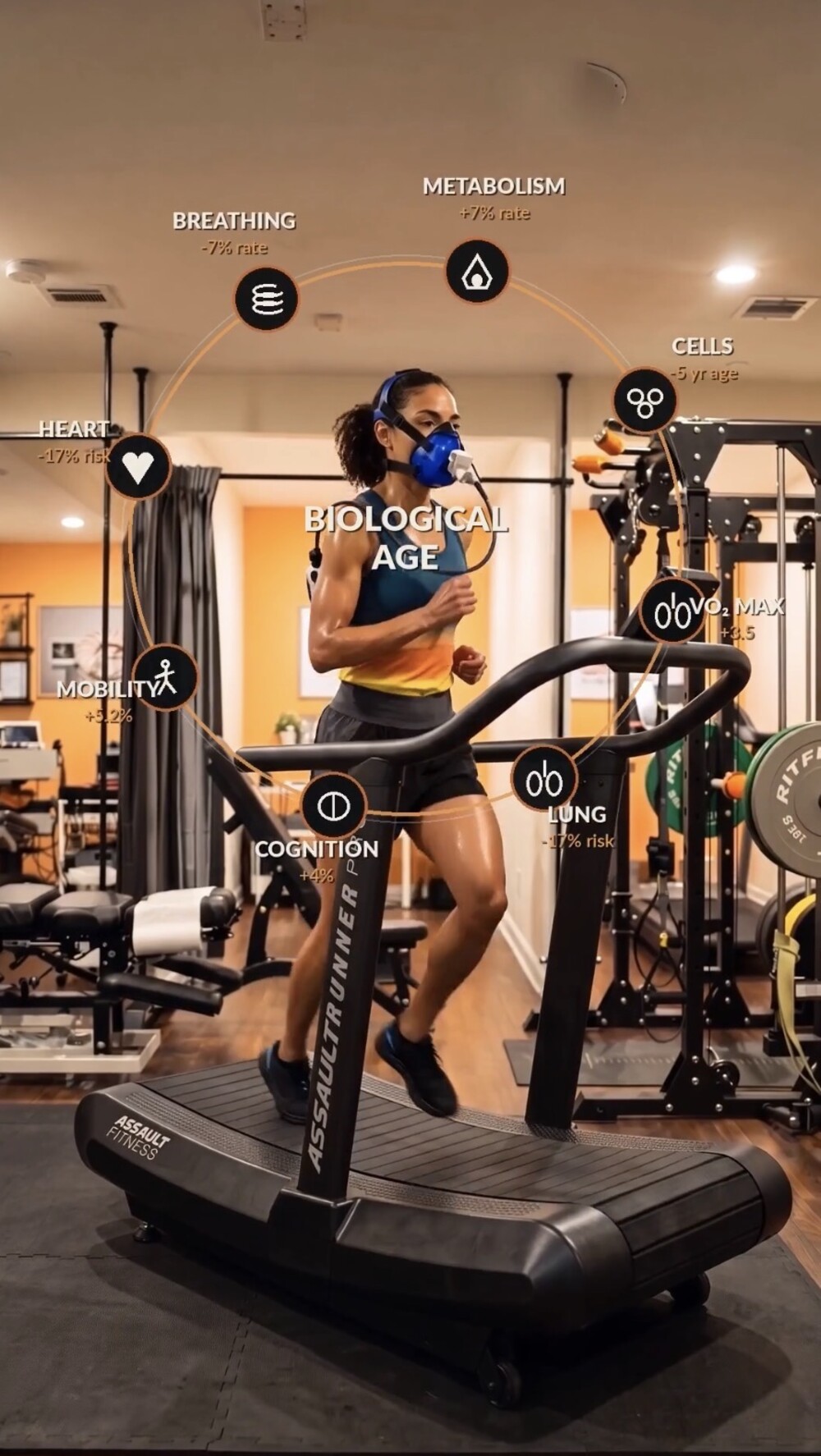
You wear a mask connected to the PNOE analyzer while I ramp the effort on a treadmill or bike. The system measures every breath (oxygen consumed, CO₂ produced, ventilation, and substrate utilization) and outputs your VO₂max, ventilatory thresholds, fat-vs-carbohydrate burning at each intensity, and breathing mechanics. The active test runs 25 to 30 minutes. RMR (resting metabolic rate) takes about 10 additional minutes if you add it.
Beyond performance: RMR for weight loss & GLP-1s
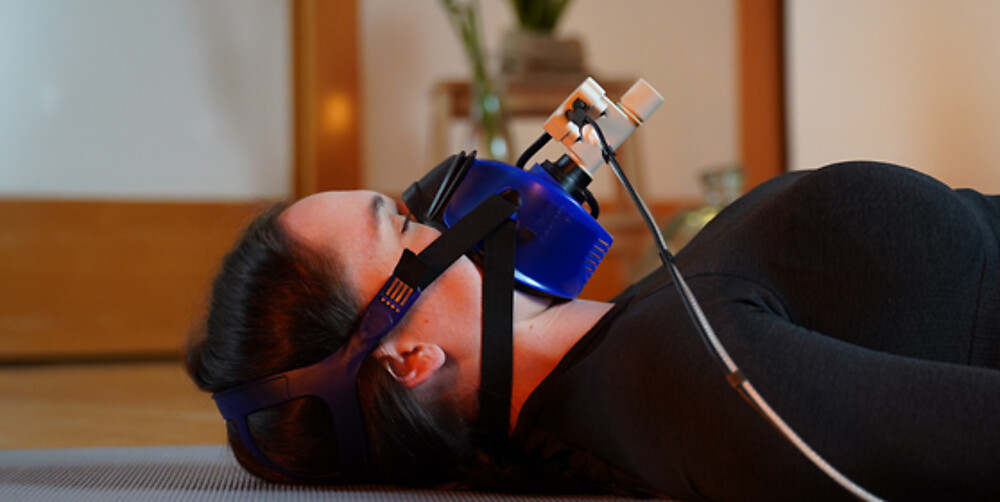
Metabolic testing isn't only for athletes chasing a PR. The same PNOE analyzer measures your Resting Metabolic Rate (RMR), exactly how many calories your body burns at rest. That's your real daily baseline, measured breath by breath, instead of guessed from an online calculator that can be off by hundreds of calories.
I run the same PNOE visit for both outputs: your VO2max sets your training zones for performance, and your RMR sets your calorie and macro targets for weight loss. One test, two sets of numbers.
Real numbers to actually lose fat
From your measured RMR I build your true daily calorie and macro targets, so you're not starving or spinning your wheels, with a plan built on your physiology, not a generic formula.
Built for GLP-1s (Ozempic, Wegovy, Zepbound)
GLP-1 medications work by cutting appetite, which is exactly why they can backfire: eat too little, or too little protein, and much of the weight you lose is muscle, not fat. An RMR test tells you precisely how much to eat and how much protein to hold onto lean mass, so the scale drops for the right reason and you're less likely to rebound when you come off the medication.
Track fat, not just the scale
Pair the RMR test with a Styku 3D body composition scan and we track whether you're actually losing fat and keeping muscle over time, with real data, side by side, instead of trusting the bathroom scale.
Who it's for
- Runners optimizing endurance, pacing, and zones
- Athletes who want training intensities backed by physiology, not wearable estimates
- Anyone targeting body composition who needs an accurate RMR and substrate-use baseline
- Returning-to-performance athletes who want a measurable benchmark
What it helps
- Personalized training zones (HR and pace)
- Fueling and nutrition targets (calories, fat/carb ratios)
- Aerobic and metabolic efficiency baselines
- Objective fitness benchmarking and retesting over time
What to expect
The active VO₂max test runs 25 to 30 minutes; add RMR for ~10 more minutes. You'll leave with a written interpretation, zones, and a baseline for future retests.
FAQ
Is the VO₂max test hard?+
It's progressive, ramping from comfortable to hard so I can see where your physiology shifts. You're in control, I monitor you the whole time, and I stop when I've gathered the data I need.
Treadmill or bike?+
Either. I match the modality to your sport. Runners typically test on the treadmill; cyclists on the bike. The data translates either way.
How should I prepare?+
Well-fueled, comfortable to run or bike, no hard training that morning, hydrated. Wear what you train in. I send specific instructions ahead of time.
How is this different from my Garmin or Apple Watch estimate?+
Wearable estimates are based on heart-rate algorithms and population averages. PNOE measures your actual gas exchange breath-by-breath; it's the lab-grade reference your watch is trying to guess at.
How often should I retest?+
Most people retest every 3 to 6 months to track progress and recalibrate zones.
Who shouldn't do a VO₂max test?+
Certain cardiovascular conditions and active illness are reasons to defer or modify. I screen at intake and won't proceed unless it's safe.
Should I add the Styku body composition scan?+
Many people do. It's quick, complementary, and gives you a body-composition baseline alongside the metabolic data. Easy to track both together.
Is it covered by insurance?+
Form & Function is a cash-based (self-pay) practice. I don't bill insurance directly, which lets me spend more time with you and build your plan around what you actually need instead of what an insurer will approve. Fees are discussed up front. On request I can provide a detailed receipt (superbill) you may submit to your insurance for possible out-of-network reimbursement, though reimbursement isn't guaranteed.
Book your evaluation.
I'll figure out whether VO₂max is the right fit for your case.