
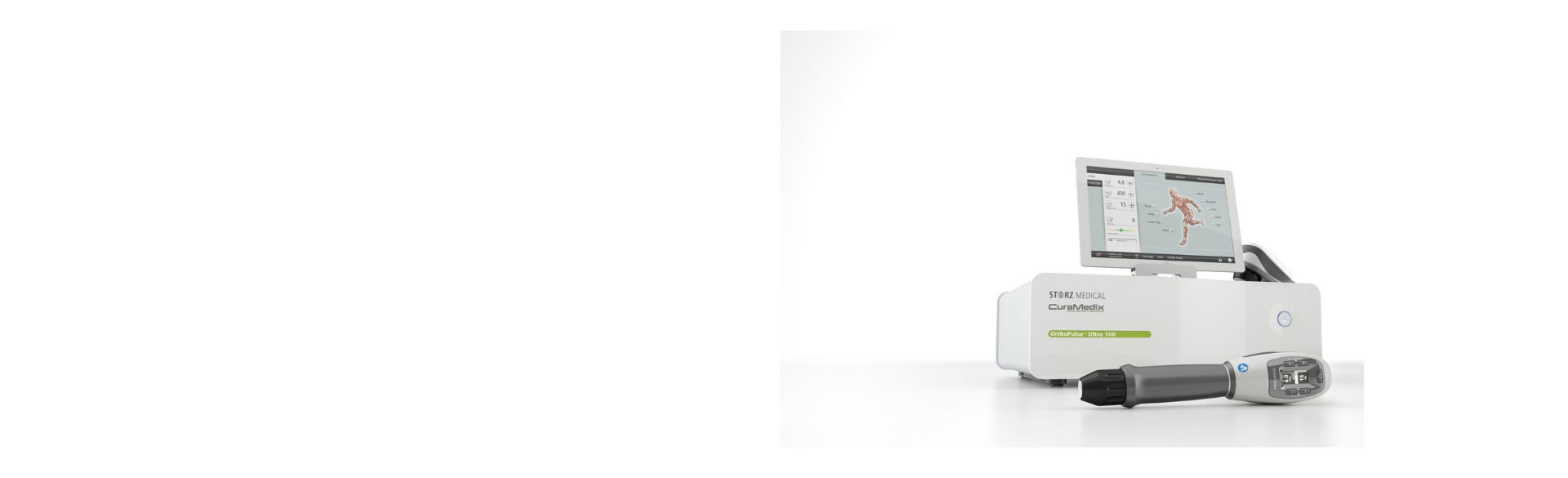
Radial Pressure Wave Therapy (EPAT)
Broader acoustic waves for muscle, fascia, and trigger-point pain.
Frequently layered with Focused Shockwave (ESWT) and EMTT in the same plan.
What it is
Radial pressure wave therapy (EPAT) uses broader, more superficial acoustic waves to address tendon, muscle, and myofascial pain, from trigger points and scar tissue to IT band tightness and chronic muscular tension. Frequently combined with focused shockwave in the same plan to cover both superficial and deep tissue.
How it works
A ballistic projectile inside the handpiece generates radial pressure waves that disperse across a broader, more superficial treatment area. The mechanical energy boosts local circulation, drives mechanotransduction (the cellular response to mechanical loading) in muscle and tendon, and helps release trigger points and adhered fascia. Where focused shockwave drills deep to a precise target, radial covers area.
Who it's for
- Superficial tendon and muscle pain
- Myofascial trigger points and chronic muscular tension
- IT band syndrome and broader fascial restrictions
- Scar tissue and post-injury adhesions
- Cases that benefit from broad treatment area combined with deep focused shockwave
What it helps
- Myofascial trigger points
- IT band syndrome
- Hamstring & calf tightness
- Superficial tendon irritation
- Scar tissue & post-injury adhesions
What to expect
A typical course is approximately 6 weekly visits, about 30 minutes each. It's non-invasive with no downtime, so you can usually train around it. Results build over the series and continue developing for months after the final session as the tissue remodels. Radial pressure waves feel like a tolerable, rapid tapping over a broader area than focused shockwave.
Why my shockwave is different
Storz Medical equipment
Storz Medical DUOLITH, the gold-standard hardware. No cheap knock-off radial heads.
Expert-trained protocols
Treatment parameters come from advanced mentorship with internationally recognized experts in shockwave for running and tendon injury, not a one-day weekend course.
Whole-runner integration
Radial waves are layered with focused shockwave, EMTT, and loading rehab inside the ADAPT plan, never delivered in isolation.
FAQ
How is radial pressure wave (EPAT) different from focused shockwave?+
Radial is broader and more superficial, great for muscle, fascia, and trigger points. Focused is deeper and pinpointed, better for chronic tendon and bone pain. They're often used together so the plan covers both depths.
Does it hurt?+
It's a tolerable, rapid tapping sensation. Intensity is dialed to your tolerance throughout, no anesthetic is needed, and it stops the moment I stop.
How many sessions will I need?+
Most cases follow a course of approximately 6 weekly visits, about 30 minutes each. I re-evaluate along the way and adjust.
How soon will I see results?+
Some change can show up inside the series, but the bigger gains build over the months after the final session as the tissue remodels.
Is there any downtime? Can I keep training?+
No. It's non-invasive, so you can train around it. I'll coach you on what to load and what to back off in the 24 to 48 hours after a session.
Is it safe? Is it FDA-cleared?+
Yes, shockwave and EMTT are FDA-cleared, well-studied, and have been used clinically for decades. There are a few situations where I don't use it (pregnancy, certain implants, blood thinners, active cancer in the treatment area, open wounds). I screen for all of that at your evaluation.
Who is NOT a good candidate?+
I avoid radial pressure wave during pregnancy, over active malignancy in the treatment area, over open wounds or active infection, and over certain implants. Patients on blood thinners need a conversation first. I screen all of this at evaluation.
What happens at the first visit?+
A full evaluation: history, exam, and movement screen, plus ultrasound imaging if it'll sharpen the diagnosis or treatment target. Then I lay out the plan and what you'll do between visits.
How long do results last?+
Because I pair the modality with mobility and progressive loading inside the ADAPT plan, results tend to hold long-term. Most patients don't need ongoing maintenance sessions.
Is it covered by insurance?+
Form & Function is a cash-based (self-pay) practice. I don't bill insurance directly, which lets me spend more time with you and build your plan around what you actually need instead of what an insurer will approve. Fees are discussed up front. On request I can provide a detailed receipt (superbill) you may submit to your insurance for possible out-of-network reimbursement, though reimbursement isn't guaranteed.
Conditions I use it for
Book your evaluation.
I'll figure out whether Radial is the right fit for your case.