
Posterior Tibial & Peroneal Tendon Pain
Pain along the inner or outer ankle that flares with miles or hills.
What it is
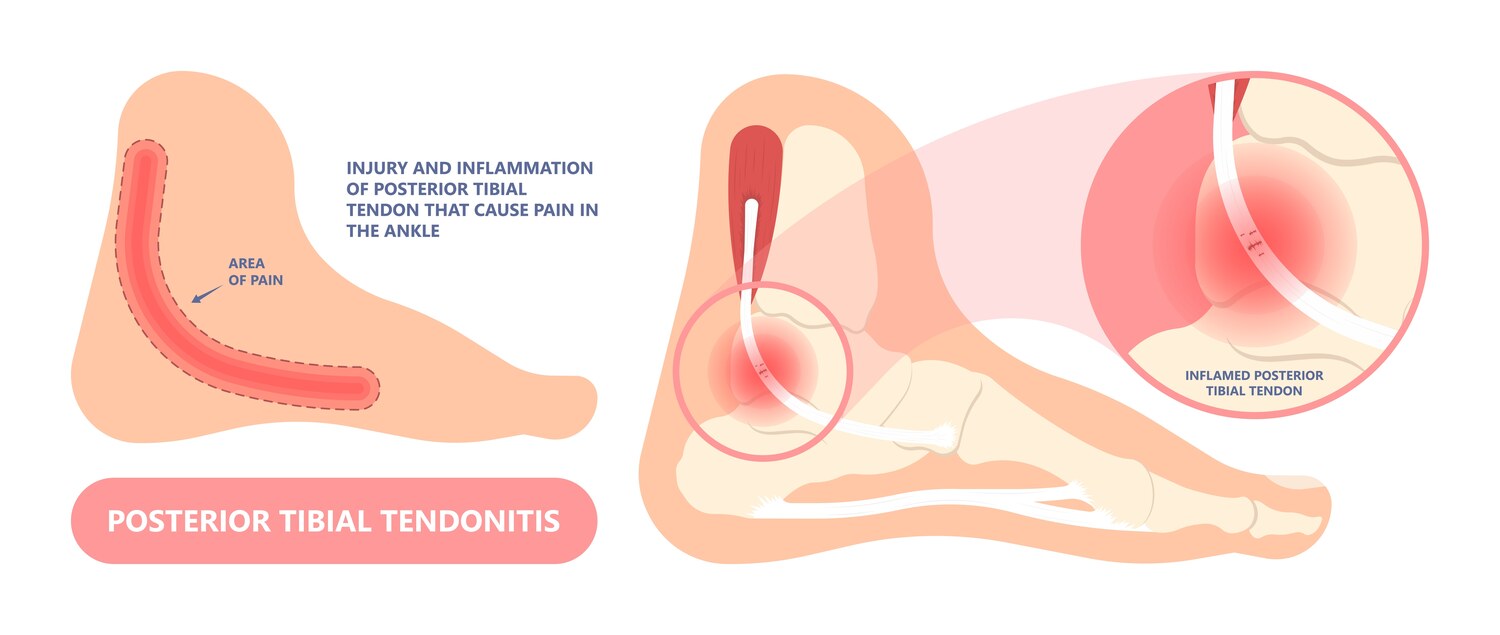
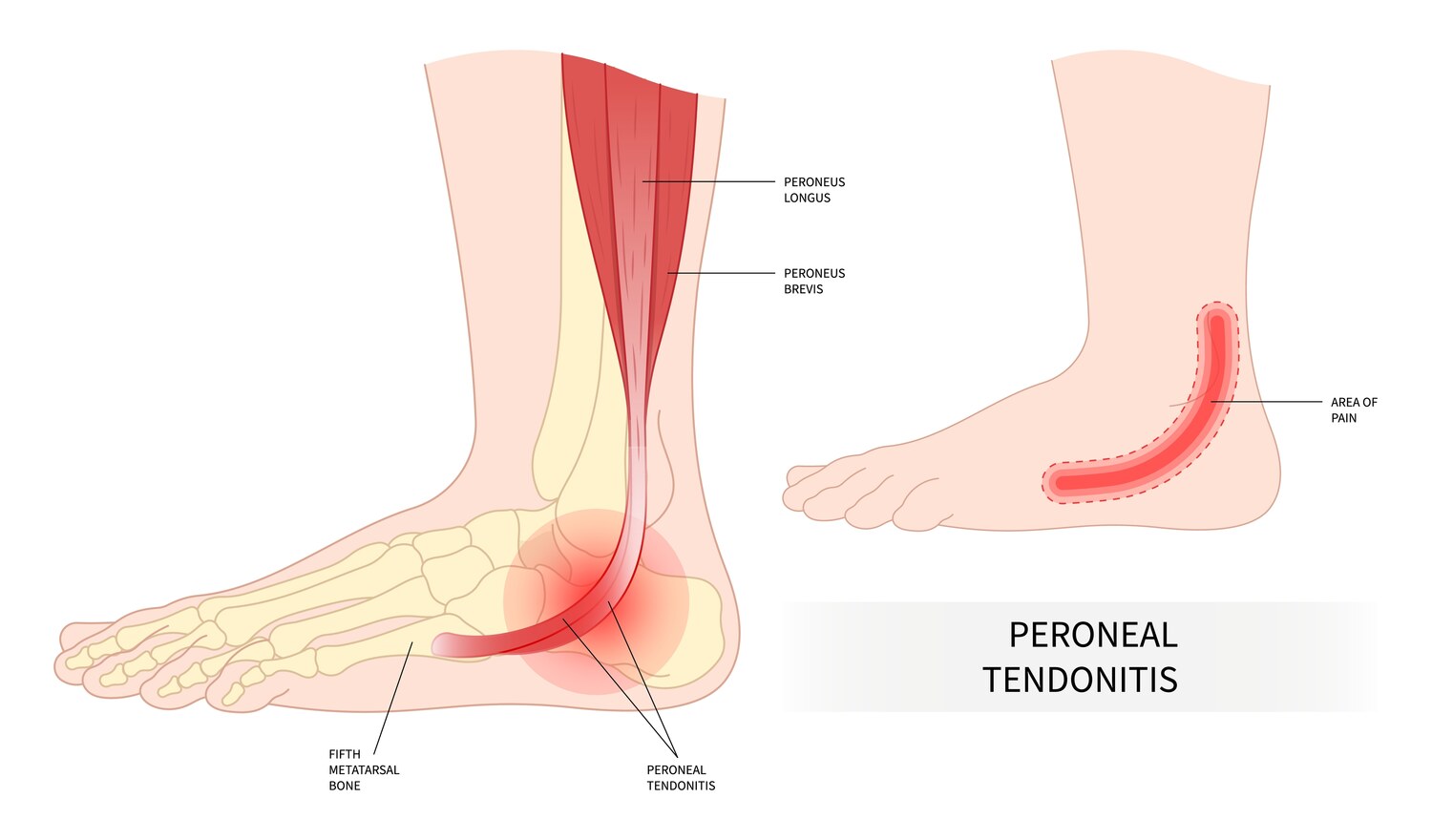
Tendinopathy of the posterior tibial (inner ankle) or peroneal (outer ankle) tendons, both common in runners and on uneven terrain.
Common symptoms
- Pain along the inner ankle / arch (post-tib) or outer ankle (peroneal)
- Worse with hills, trails, or high mileage
- Swelling, weakness pushing off
Why it happens: root cause
Foot/ankle stabilizers haven't kept up with the demand of your training or terrain. When load on a tissue chronically exceeds its capacity, pain shows up. My job is to close that gap, by lowering load, raising capacity, or both, so the tissue stops being overwhelmed.
A closer look
Inner-ankle pain usually points to the posterior tibial tendon; outer-ankle pain to the peroneal tendons. They sit on opposite sides with different loading drivers, so correct diagnosis guides treatment. Clarius MSK ultrasound can confirm which tendon is involved when it's unclear.
What causes it(Load > Capacity = Pain)
- Increases in mileage, hills, or uneven/trail terrain
- Reduced foot and ankle stabilizer strength
- Limited ankle mobility
- Foot mechanics (overpronation for posterior tibial; lateral instability or prior sprains for peroneal)
- Footwear
Why it keeps coming back
- Stabilizer strength not fully restored
- Returning to terrain or volume too soon
- Unaddressed foot/ankle mechanics
Why rest, stretching, and passive care aren't enough
Rest can calm the tendon but doesn't restore its capacity; progressive loading plus foot/ankle stability work is the foundation of lasting recovery.
Conditions that can mimic this
- Ankle sprain / ligament injury
- Achilles tendinopathy
- Bone stress injury
- Plantar fascia overload
- Nerve entrapment
When the source is unclear, Clarius MSK ultrasound can confirm which tendon is involved and help rule other causes in or out.
How I treat it
How the ADAPT Method treats your Posterior Tibial & Peroneal Tendon Pain
- A
Assess
Distinguish posterior tibial (inner) from peroneal (outer) tendon involvement, screen single-leg balance, foot posture, and your trail/road mix. Clarius MSK ultrasound is used to confirm tendon involvement when needed.
- D
Decrease Pain
Modify hills, terrain, and weekly volume, then layer Focused Shockwave (ESWT), Radial Pressure Wave (EPAT), and EMTT on the affected tendon and peritendinous tissue to drive a healing response without numbing it.
- A
Activate
Restore subtalar and ankle mobility, intrinsic foot control, and hip stability so the foot isn't compensating.
- P
Progress
Progressive tendon loading; heel raises with eversion/inversion bias for the involved tendon, single-leg balance progressions, and graded calf work.
- T
Transfer
Structured return to running and trails, with Running Analysis if a gait pattern is loading the tendon disproportionately.
ADAPT closes the gap between LOAD and CAPACITY, lowering what's stressing the tissue while building what the tissue can handle.
FAQ
How do I know which tendon it is?+
Inner ankle/arch pain pushing off usually means posterior tibial; outer ankle pain that worsens on trails or uneven ground usually means peroneal. Exam quickly sorts it; ultrasound confirms when needed.
Should I stop running?+
Modify, don't stop, usually. Hills, trails, and high mileage are typical aggravators, so I adjust those first.
Will I always need orthotics?+
Not necessarily. Orthotics can be a useful short-term offload, but the long-term fix is building tendon and foot capacity so you don't depend on them.
Does shockwave help these tendons?+
Yes. Focused Shockwave has good evidence across lower-extremity tendinopathies and is a core tool for chronic posterior tibial and peroneal cases.
Do I need an MRI?+
Usually no, at least not first. Most musculoskeletal issues are diagnosed by history and exam. I use Clarius MSK diagnostic ultrasound in-office when it actually changes the plan: confirming a tendon issue, ruling between two diagnoses, or guiding treatment. I refer for MRI when red flags or surgical questions warrant it.
How long to recover?+
Most cases meaningfully improve in 6 to 10 weeks of focused work. Chronic cases (over a year) take longer but respond well to combined shockwave + loading.
Will it come back?+
Only if foot/ankle strength fades again. I leave you with a short, repeatable maintenance set you keep doing.
Do you take insurance?+
Form & Function is a cash-based (self-pay) practice; I don't bill insurance directly. That lets me spend more time with you and build your plan around what you actually need, not what an insurer will approve. Fees are discussed up front. On request I can provide a detailed receipt (superbill) you may submit to your insurance for possible out-of-network reimbursement, though reimbursement isn't guaranteed.
What happens at the first visit?+
I sit down and talk through your history, training, and what you've already tried. Then I go through a hands-on movement and strength assessment, look at the painful area (and the joints above and below), and use Clarius MSK ultrasound in-office when it sharpens the diagnosis. You leave with a working diagnosis and a written plan, not a vague 'come back next week.'
Book your evaluation.
An honest assessment is the first step in the ADAPT method, and the fastest path to a real plan.