
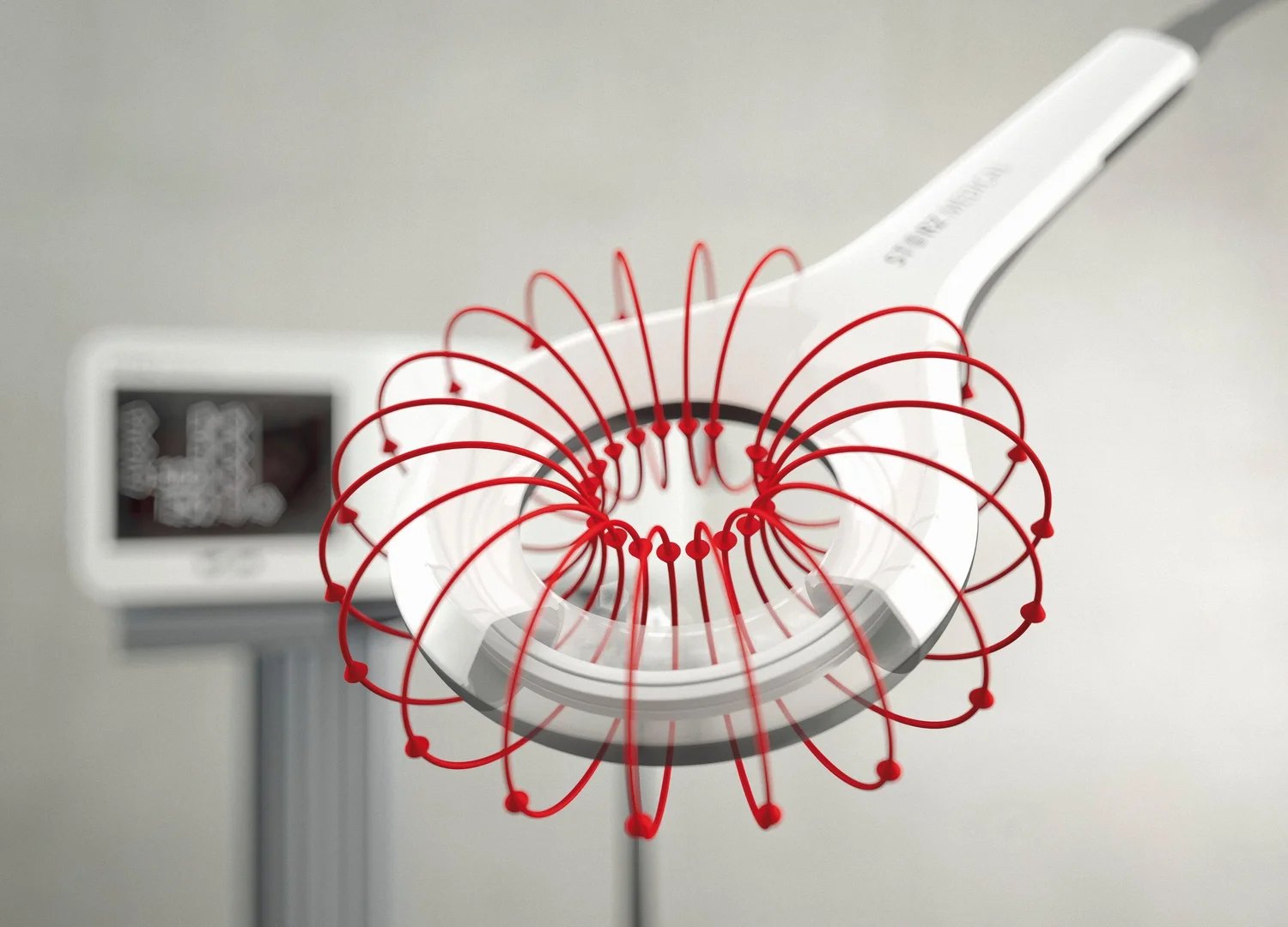
EMTT Therapy in Brooklyn, NY: Advanced Regenerative Treatment for Chronic Pain & Sports Injuries
EMTT (Extracorporeal Magnetotransduction Therapy) uses high-energy magnetic pulses to reach deep tissue and switch on the cell-level processes behind healing. It is not the same as PEMF, which is far gentler. EMTT works on its own for chronic and degenerative pain, and works even better paired with shockwave: one directs where to heal, the other helps the cells heal. Sessions are quick, painless, and usually done once or twice a week over a short series.
EMTT Therapy Explained: How It Works, How It Differs From PEMF, and Why It's a Powerful Regenerative Treatment
Extracorporeal Magnetotransduction Therapy (EMTT) is an advanced, non-invasive regenerative technology designed to reduce pain, stimulate tissue repair, and restore cellular function in chronic and degenerative conditions.
Unlike traditional therapies that work only at the surface, EMTT delivers high-energy magnetic pulses deep into tissue—activating muscles, tendons, joints, bone, and nerves without mechanical stress or downtime.
EMTT can be used:
- As a stand-alone treatment
- Or as part of a multi-modal regenerative approach, commonly paired with extracorporeal shockwave therapy and rehabilitation
What Is EMTT Therapy?
EMTT uses high-frequency, high-energy magnetic fields to induce electrical currents inside the body's tissues. These currents stimulate cellular processes responsible for healing, inflammation control, and tissue remodeling.
Because magnetic fields are not blocked by skin, fat, or bone, EMTT can reach deep, hard-to-treat structures that often fail to respond to manual therapy alone.
How EMTT Works at the Cellular Level
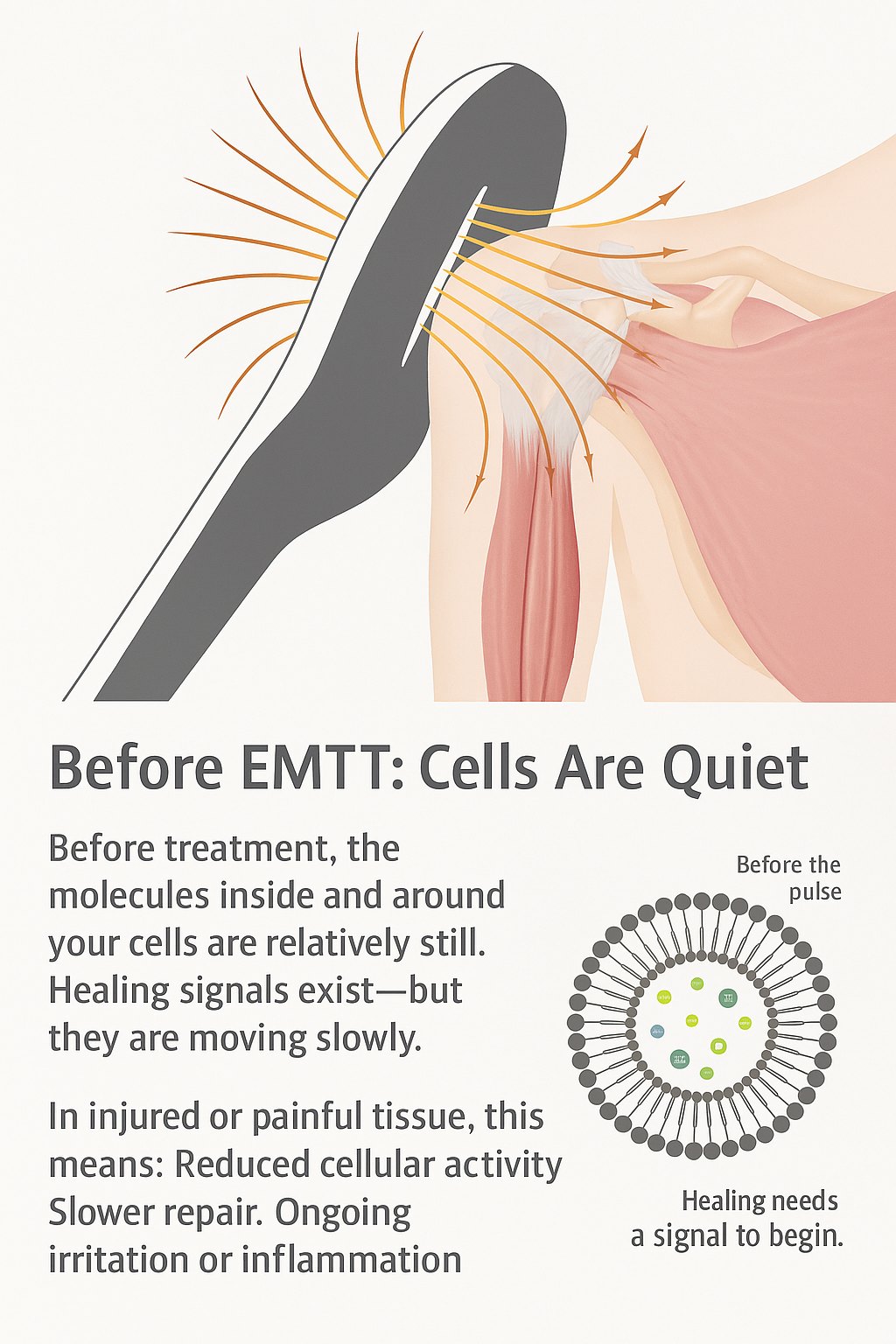
/Before EMTT: Cells Are Quiet
Before treatment, injured or painful tissue often shows reduced cellular activity. Healing signals are present, but they move slowly.
This results in:
- Slower tissue repair
- Persistent inflammation
- Chronic pain or stiffness
Cells essentially become “stuck” in a low-energy, low-response state.
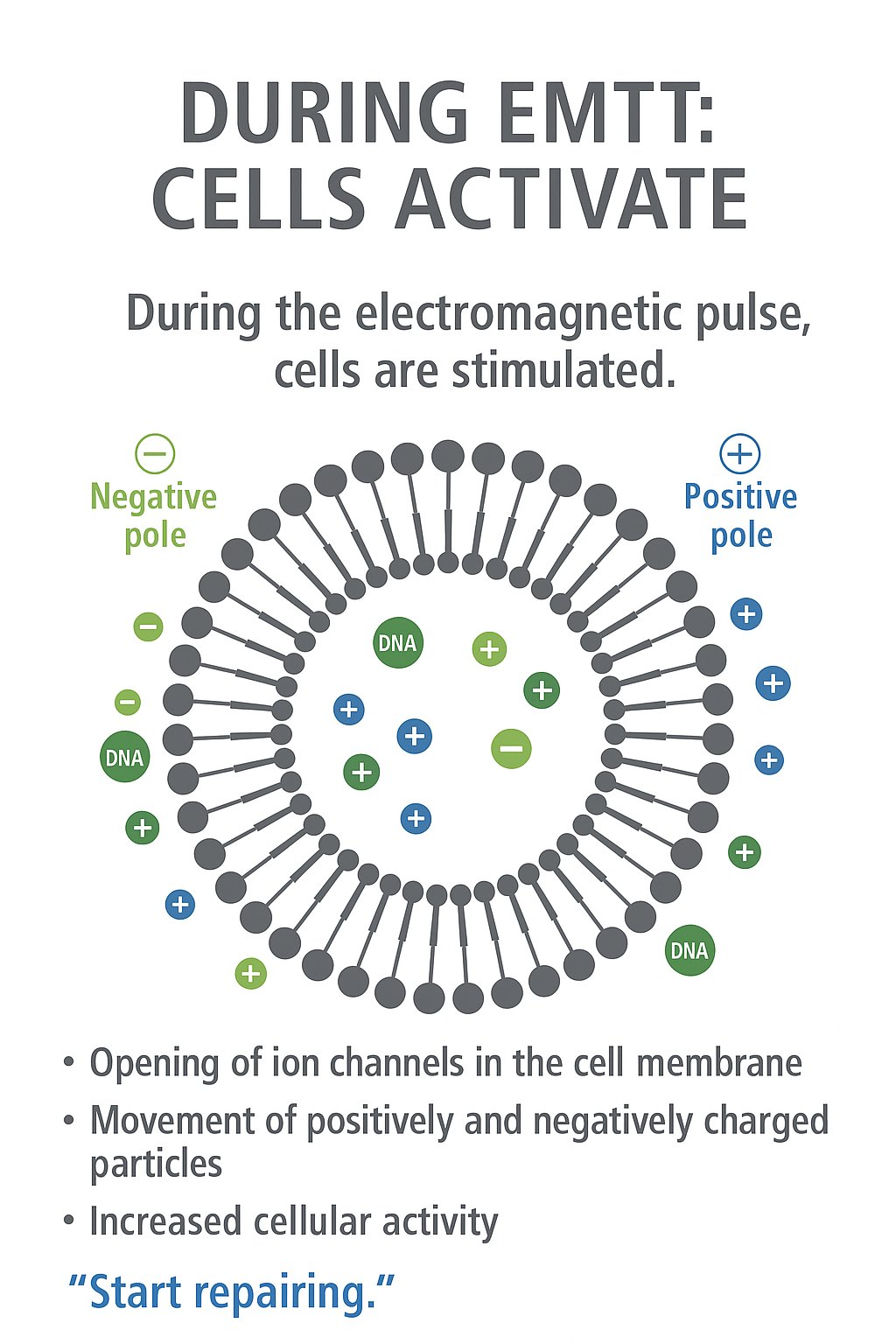
/During EMTT: Cells Activate
During EMTT, high-energy magnetic pulses open ion channels in the cell membrane and move positively and negatively charged particles across the membrane. leads to:
- Increased cell membrane permeability
- Transport of key healing messengers like calcium and ATP
- Enhanced mitochondrial activity
- A clear biological signal: start repairing
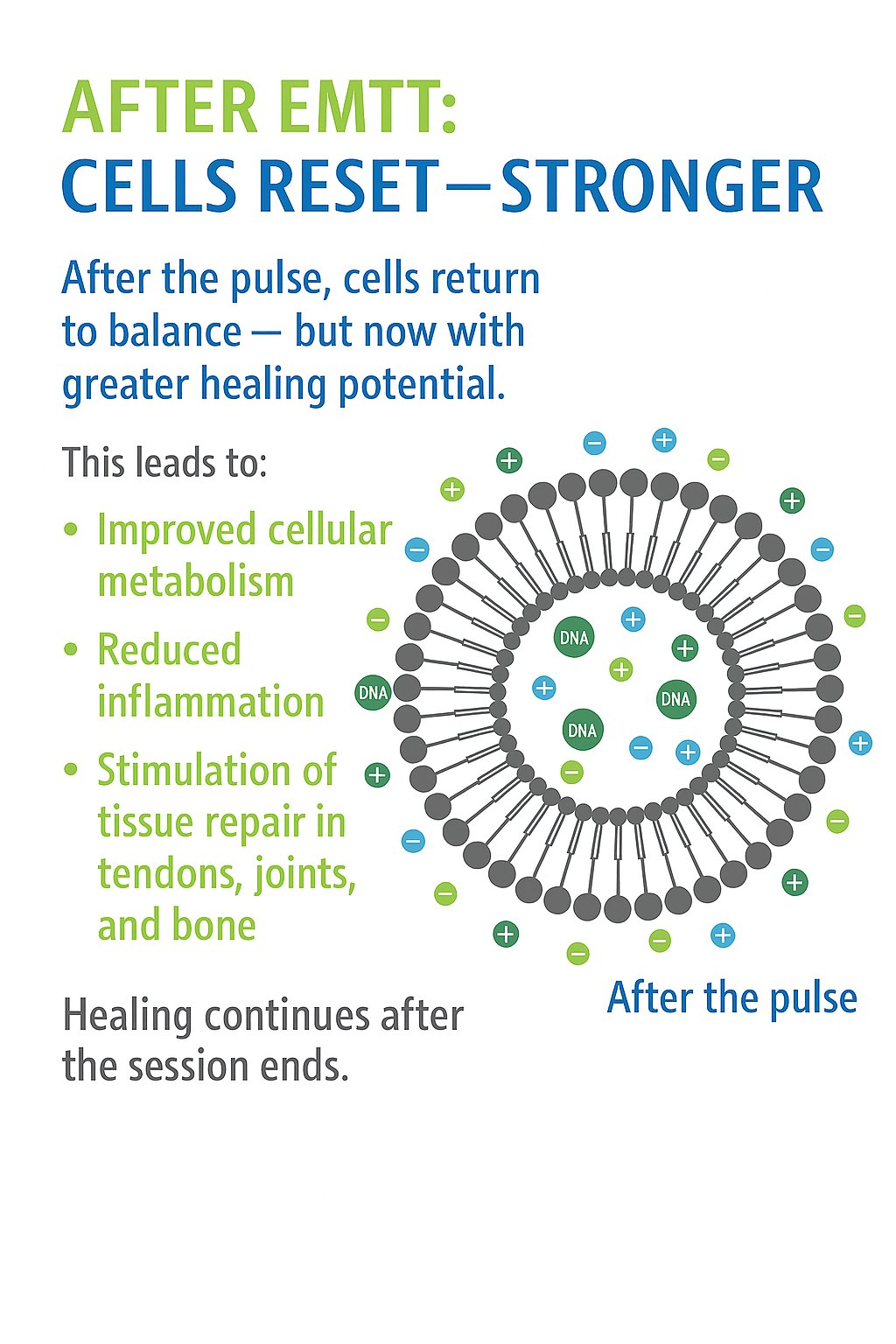
/After EMTT: Cells Reset, Stronger
After the pulse, cells return to balance, but now with greater healing potential.
This results in:
- Improved cellular metabolism
- Reduced inflammation
- Stimulation of tissue repair in tendons, joints, and bone
Importantly, healing continues after the session ends, which explains why many patients continue improving days and weeks after treatment.
EMTT vs PEMF: What's the Difference?
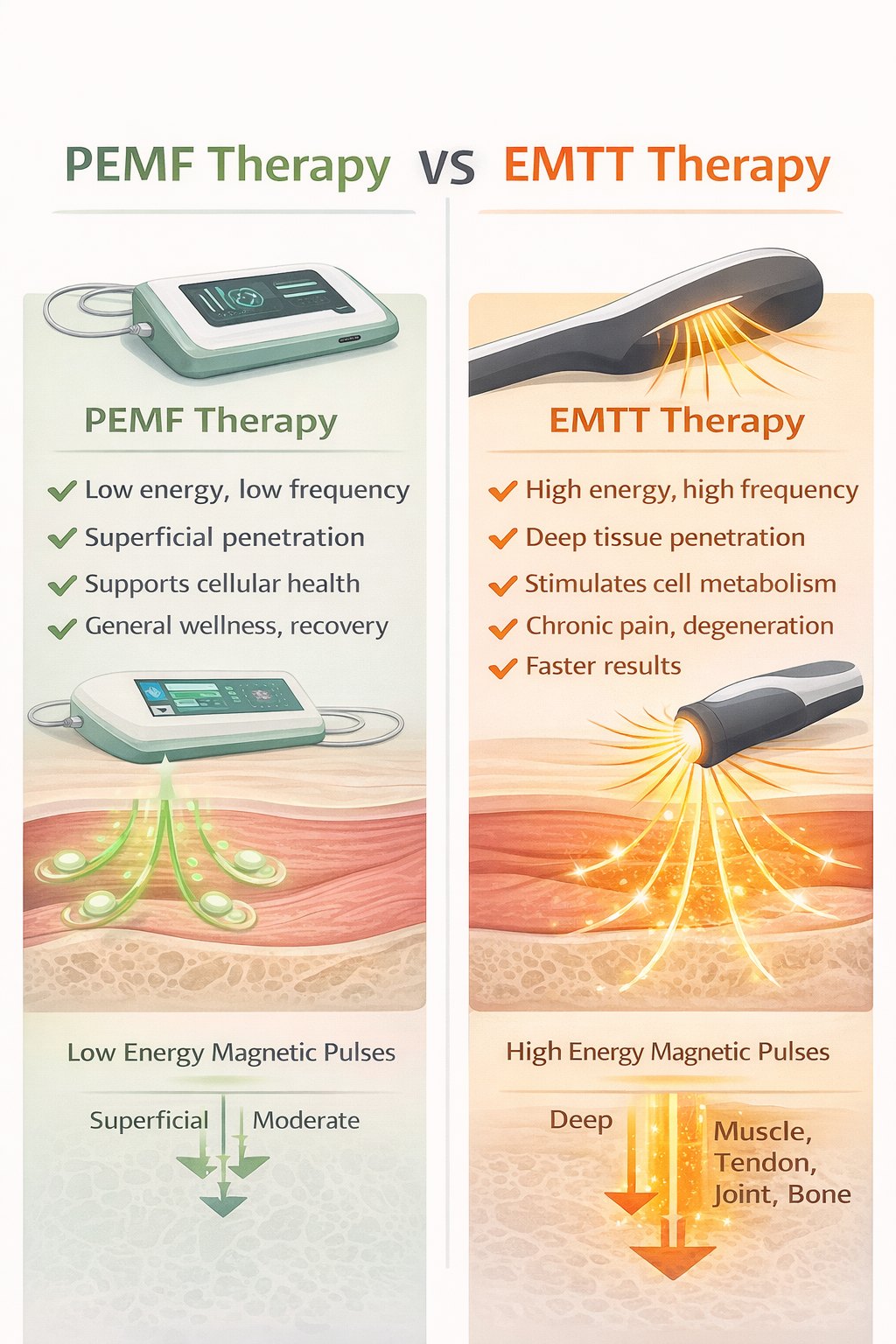
Although both therapies use electromagnetic fields, EMTT and PEMF are not the same.
/PEMF (Pulsed Electromagnetic Field Therapy)
PEMF uses low-energy, low-frequency fields to support general cellular wellness. It is commonly used for:
- Relaxation and recovery
- Circulation support
- Bone density maintenance
- Nervous system calming
PEMF is gentle and supportive, but limited in intensity.
/EMTT (Extracorporeal Magnetotransduction Therapy)
EMTT delivers:
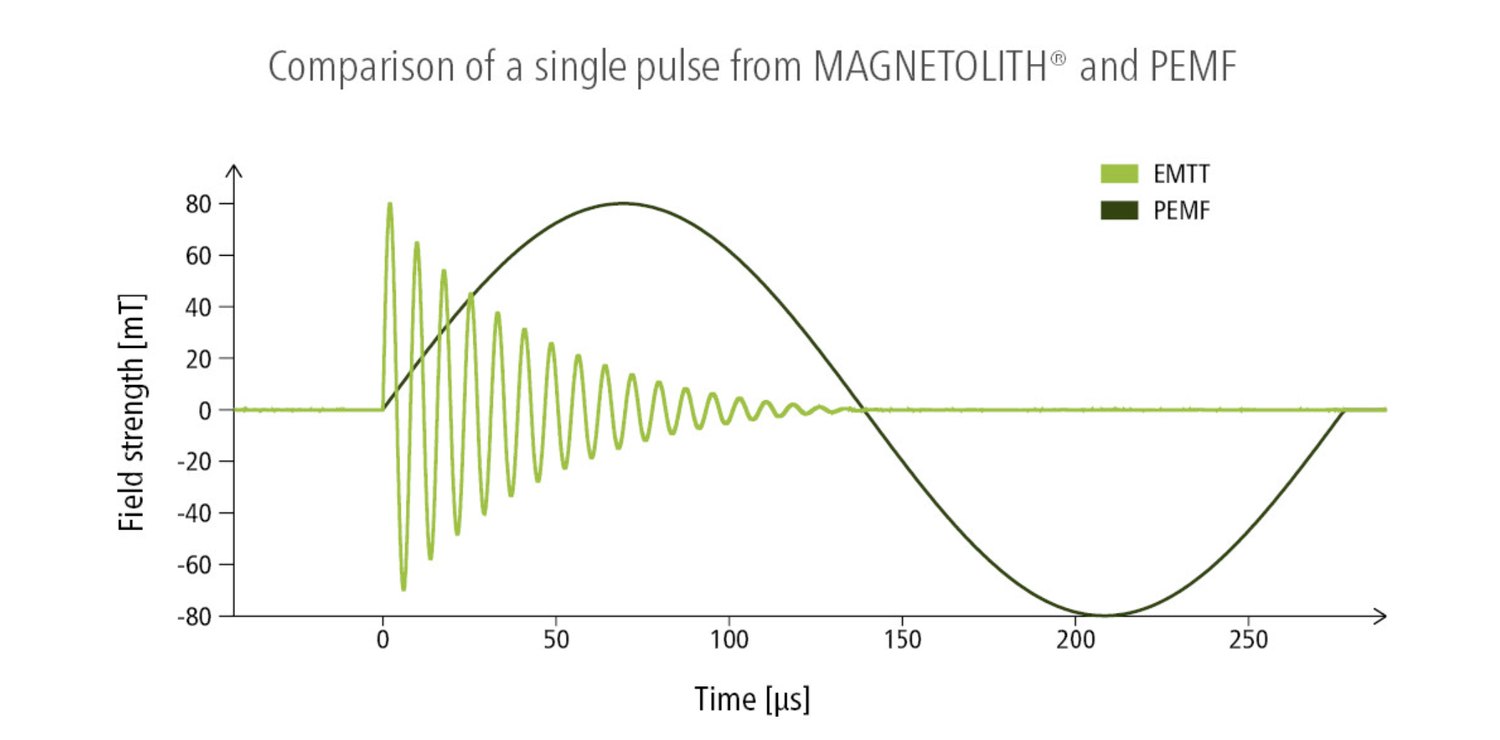
- Significantly higher magnetic field strength
- Higher frequencies
- Deeper tissue penetration
- A stronger biological response
Simple analogy: PEMF is like walking for health. EMTT is like strength training for cells.
Both have value, but EMTT is better suited for chronic pain, degenerative conditions, and stubborn injuries.
EMTT as a Stand-Alone Therapy
EMTT is highly effective on its own, especially for patients who:
- Cannot tolerate manual therapy
- Have deep or diffuse pain
- Need non-invasive options
- Want minimal downtime
Patients often report:
- Reduced pain after early sessions
- Improved mobility
- Faster recovery between visits
- Continued improvement after care ends
EMTT as Part of a Multi-Modal Regenerative Approach
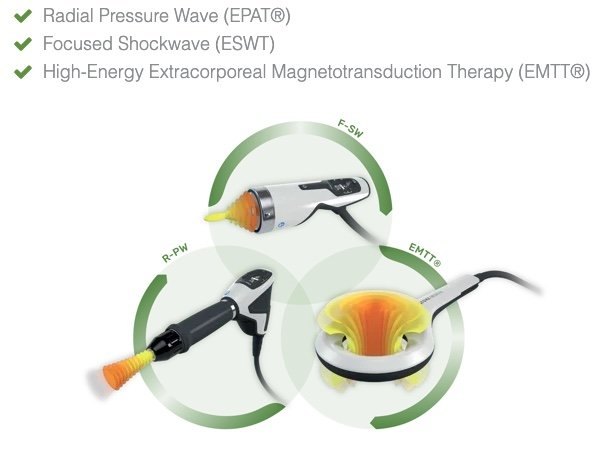
While EMTT works independently, outcomes are often enhanced when combined with other regenerative therapies.
/Why EMTT + Dual Wave Shockwave Therapy Works Better (Radial Pressure Wave and Focused Shockwave)
- Shockwave therapy provides mechanical stimulation and directs healing to specific tissue
- EMTT activates cellular metabolism and improves tissue responsiveness
Together, they address both structure and cellular function, creating more durable results.
Shockwave tells the tissue where to heal. EMTT tells the cells how to heal.
Conditions Commonly Treated With EMTT
EMTT is used for a wide range of musculoskeletal and degenerative conditions, including:
- Chronic tendinopathies (Achilles, patellar, rotator cuff)
- Plantar fasciitis
- Tennis and golfer's elbow
- Knee, hip, and shoulder osteoarthritis
- Chronic low back pain
- Degenerative disc conditions
- Muscle strains and myofascial pain
- Post-surgical or delayed healing cases
What Does the Research Show?
Clinical and experimental research on high-energy magnetic field therapies demonstrates:
- Reduced pain and improved function in chronic musculoskeletal conditions
- Enhanced outcomes when combined with shockwave therapy
- Positive effects on cell metabolism, inflammation modulation, and tissue remodeling
- Sustained improvements beyond the treatment period
Peer-reviewed literature in journals such as Journal of Orthopaedic Surgery and Research and Bioelectromagnetics supports the biological plausibility and clinical utility of high-energy magnetic therapies in regenerative care.
What to Expect During EMTT Treatment
- Sessions typically last 10 to 15 minutes
- Non-invasive and painless
- No downtime
- No anesthesia or medication
- Commonly performed 1 to 2 times per week in a short treatment series
Most patients describe the sensation as rhythmic pulsing or tapping.
Is EMTT Right for You?
EMTT is ideal for patients seeking:
- Non-surgical pain relief
- Faster recovery
- Evidence-based regenerative care
- A solution beyond temporary symptom management
If chronic pain or injury hasn't responded to traditional care, EMTT may help reset the healing process at the cellular level.
/Learn how EMTT therapy is used in our Brooklyn clinic and whether it's right for your condition.
Frequently Asked Questions
What is EMTT therapy?
EMTT, or Extracorporeal Magnetotransduction Therapy, uses high-frequency, high-energy magnetic fields to induce tiny electrical currents inside your tissue. Those currents stimulate the cellular processes behind healing, inflammation control, and tissue remodeling. Because magnetic fields pass through skin, fat, and bone, they can reach deep structures that manual therapy cannot.
What is the difference between EMTT and PEMF?
Both use electromagnetic fields, but they are not the same. PEMF uses low-energy, low-frequency fields for general wellness and recovery. EMTT delivers much higher field strength, higher frequencies, and deeper penetration for a stronger biological response. A simple way to put it: PEMF is like walking for health, EMTT is like strength training for your cells.
What conditions does EMTT treat?
It is used for chronic tendinopathies (Achilles, patellar, rotator cuff), plantar fasciitis, tennis and golfer's elbow, knee, hip, and shoulder osteoarthritis, chronic low back pain, muscle strains, and slow or post-surgical healing.
Does EMTT hurt, and is there downtime?
No. Sessions last about 10 to 15 minutes, are non-invasive and painless, and need no anesthesia or downtime. Most people describe the feeling as a rhythmic pulsing or tapping. It is commonly done once or twice a week in a short series.
Is EMTT better on its own or combined with shockwave?
It works well on its own, especially for deep or diffuse pain and for people who cannot tolerate manual therapy. Outcomes are often stronger when it is combined with shockwave, because shockwave provides mechanical stimulation and tells the tissue where to heal, while EMTT activates the cells and helps them heal.
Related conditions & treatments
Not sure what you're dealing with?
A thorough evaluation tells me exactly where the load-capacity gap is and what it takes to close it.