
Diagnostic MSK Ultrasound (Clarius MSK)
Point-of-care, high-resolution MSK ultrasound used selectively to clarify diagnosis and guide treatment.
What it is
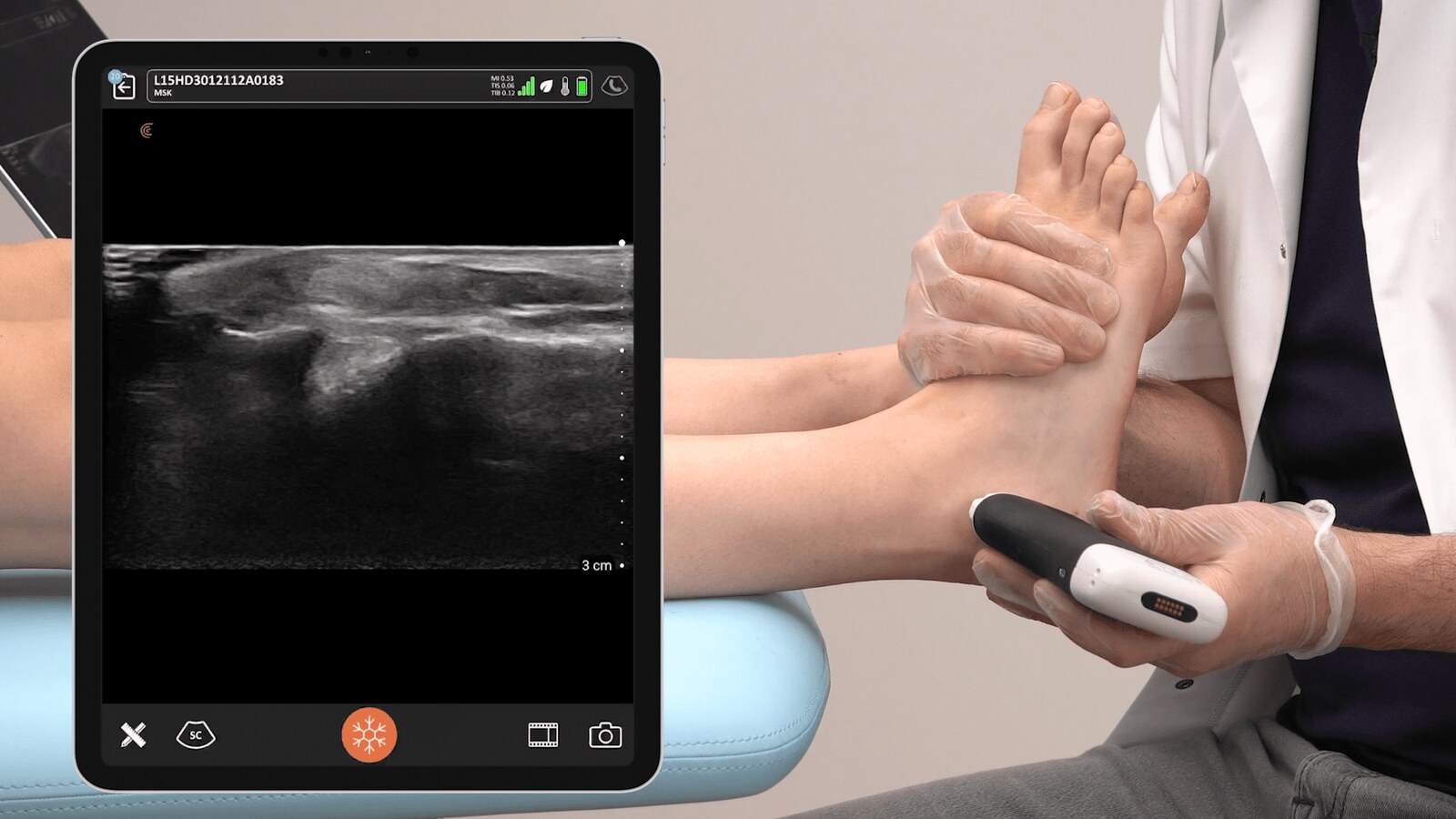
I use the Clarius MSK, a wireless, high-resolution point-of-care ultrasound, right in the office when I need to see the tissue. It is used selectively, not for every patient: when I need to distinguish between two possible diagnoses, or when I want to guide focused shockwave or EMTT to the exact spot. No radiation, no referral out, no waiting on an MRI.
How it works
Diagnostic ultrasound uses high-frequency sound waves to create a real-time, high-resolution image of tendon, ligament, muscle, bursa, and joint surfaces. The Clarius MSK is a wireless, professional-grade scanner used at the point of care, right in the room, with you watching the screen. There's no radiation, no sedation, no waiting on an outside imaging center. I use it selectively, in two situations: when I need to differentiate between two possible diagnoses (e.g., tendon vs. bursa) and when I want to guide focused shockwave or EMTT precisely to the right spot.
Who it's for
- Cases where the exam is unclear and two diagnoses are on the table
- Patients about to start focused shockwave or EMTT where precision targeting matters
- Anyone who wants real-time imaging without a referral or MRI wait
Used when the diagnosis is unclear
When the exam points to two possible structures, for example tendon vs. bursa, ultrasound lets me look and decide instead of guessing. A quick, in-office scan resolves the ambiguity so the plan targets the right tissue from the start.
Guiding treatment when precision matters
For cases where I want to deliver focused shockwave or EMTT to an exact spot, ultrasound shows me exactly where to aim. The result is targeted energy where it counts, not broad treatment across an area and hoping it lands right.
Tracking progress, when needed
I re-image selectively over the course of care to confirm the tissue is actually responding (thickness, structure, and vascularity) so the plan adapts to what the scan shows, not just symptoms alone.
What it helps
- Differentiating between two possible diagnoses (e.g., tendon vs. bursa)
- Guiding focused shockwave or EMTT to the precise target
- Ruling a suspected pathology in or out when the exam is unclear
- Objective progress tracking with repeat imaging over a care plan, when needed
What to expect
A focused scan takes just a few minutes and is reviewed with you in real time on-screen. It's quick, in-office, and used only when it changes what I do next.
How it pairs
Used selectively to guide and track Focused Shockwave (ESWT) and EMTT when the case calls for precision targeting or a clearer diagnosis.
FAQ
Do you use ultrasound on every patient?+
No. It's used selectively, only when it changes what I do next. Specifically when I need to distinguish between two possible diagnoses, or when I want to guide focused shockwave or EMTT to an exact spot.
How long does the scan take?+
Just a few minutes. It's quick, in-office, and reviewed with you on-screen in real time.
Does it hurt?+
No. A small amount of gel and a smooth probe glide over the skin. There's no needle, no pressure beyond comfortable, and no aftereffects.
Is there any radiation?+
No. Diagnostic ultrasound uses sound waves only: no radiation, no contrast, no sedation. Safe to repeat as often as the case calls for.
Does it replace an MRI?+
For many soft-tissue questions, point-of-care ultrasound answers the clinical question without an MRI, especially for tendon, ligament, bursa, and superficial muscle. When an MRI is truly the right tool (deep joint internal derangement, bone marrow questions, etc.), I'll say so and refer.
How is this different from the ultrasound at a hospital imaging center?+
The image quality is comparable. Clarius MSK is professional, high-resolution scanning. The difference is access: it happens in the room while you're being evaluated, the same clinician who's treating you is reading it, and the answer changes the plan in real time.
Do I need a referral?+
No. I perform the scan as part of your evaluation or treatment visit when it's indicated. No outside referral, no separate appointment.
How do I prepare?+
Nothing special. Wear clothing that gives access to the area I'm scanning, or I'll provide a gown. That's it.
Who is NOT a candidate?+
Diagnostic ultrasound is safe for nearly everyone, including in pregnancy. The few limitations are tissue-depth or bone-related questions that the technology simply isn't designed to answer; those go to MRI or X-ray.
Is the scan billed separately? Covered by insurance?+
Form & Function is a cash-based (self-pay) practice. I don't bill insurance directly. Fees for the scan are discussed up front, and on request I can provide a detailed receipt (superbill) you may submit for possible out-of-network reimbursement, though reimbursement isn't guaranteed.
Conditions I use it for
Book your evaluation.
I'll figure out whether Diagnostic is the right fit for your case.